
Chronic back pain is one of the most common reasons people in our communities seek help — and if you’ve been living with it, you know just how much it can affect every part of your day. From getting out of bed in the morning to sitting through work, picking up your kids, or simply enjoying a walk through the neighborhood, persistent back pain has a way of quietly stealing the life you want to live. The good news is that chronic back pain management doesn’t have to mean a lifetime of medication or resigning yourself to discomfort. There are real, evidence-supported strategies that can help you find long-term relief — and chiropractic care is one of the most established conservative options available.
What is chronic back pain?
Chronic back pain is generally defined as pain in the back that persists for 12 weeks or longer, even after the initial injury or underlying cause has been addressed. It can range from a dull, constant ache to sudden, sharp sensations that make movement difficult. Unlike acute pain, which is typically short-lived, chronic back pain requires an ongoing, thoughtful management approach.
- Understanding Chronic Back Pain
- Common Causes of Chronic Back Pain
- How Chiropractic Care Fits Into Long-Term Relief
- Practical Tips for Managing Chronic Back Pain at Home
- When to See a Chiropractor
- Comparison: Helpful vs. Harmful Daily Habits
- Myths vs. Facts About Chronic Back Pain
- Final Thoughts
- Frequently Asked Questions
- TL;DR Summary
Understanding Chronic Back Pain
Chronic back pain is not just a more severe version of the occasional sore back. It’s a distinct condition that involves changes in how the nervous system processes pain signals, how muscles and joints compensate over time, and how the body adapts — sometimes in unhelpful ways — to prolonged stress. Many patients who come to see us at Fanwood Back Relief Center describe their pain as something that has “crept up” on them over months or years, rather than something that started with one dramatic event.
The spine is a remarkably complex structure. It’s made up of 24 movable vertebrae, intervertebral discs, facet joints, ligaments, and muscles — all working together to support your body and allow movement. When any part of this system is under ongoing stress or dysfunction, the surrounding structures begin to compensate. Over time, those compensations can become their own source of pain and limitation. That’s part of what makes chronic back pain so difficult to simply “push through” without addressing the root cause.
Here in Fanwood and Flemington, we see patients from all walks of life dealing with this issue — desk workers, tradespeople, parents, retirees, athletes, and everyone in between. Chronic back pain doesn’t discriminate. But understanding how it works is the first step toward doing something meaningful about it.
Common Causes of Chronic Back Pain
There is rarely one single cause of chronic back pain. More often, it’s a combination of structural factors, lifestyle habits, and biomechanical patterns that compound over time. Understanding what’s driving your pain can help you and your chiropractor develop the most effective management strategy.
One of the most frequent contributors is spinal joint dysfunction, sometimes called a subluxation in chiropractic terminology. This refers to a joint in the spine that isn’t moving properly — either restricted or moving in a way that places abnormal stress on surrounding nerves, muscles, and ligaments. When left unaddressed, a dysfunctional joint can create a cascade of compensatory patterns throughout the spine and pelvis.
Degenerative changes are another common factor, particularly for patients in their 40s and beyond. Over decades of use, the discs between vertebrae can lose height and hydration, and the facet joints can develop wear-related changes. These are often called “wear and tear” changes, and while they’re a normal part of aging, they can become a source of chronic discomfort when combined with poor posture or inadequate joint mobility.
Poor posture and prolonged static positions have become increasingly significant contributors in today’s world. Many people in Flemington and Fanwood spend large portions of their day seated — at desks, in cars, on couches. Sustained forward head posture and rounded shoulders place significant load on the lower and mid back, creating the conditions for chronic muscle tension and joint stress over time.
Other contributing factors can include previous injuries that were never fully rehabilitated, muscle imbalances, sedentary lifestyle, and even stress — which research suggests can amplify how the body experiences and processes pain signals.
How Chiropractic Care Fits Into Long-Term Relief
When it comes to chronic back pain management, guidelines from respected health organizations — including the American College of Physicians — have increasingly emphasized conservative, non-pharmacological approaches as a first line of care. Manual chiropractic adjustments are specifically recognized within these guidelines as a viable option for managing chronic low back pain.
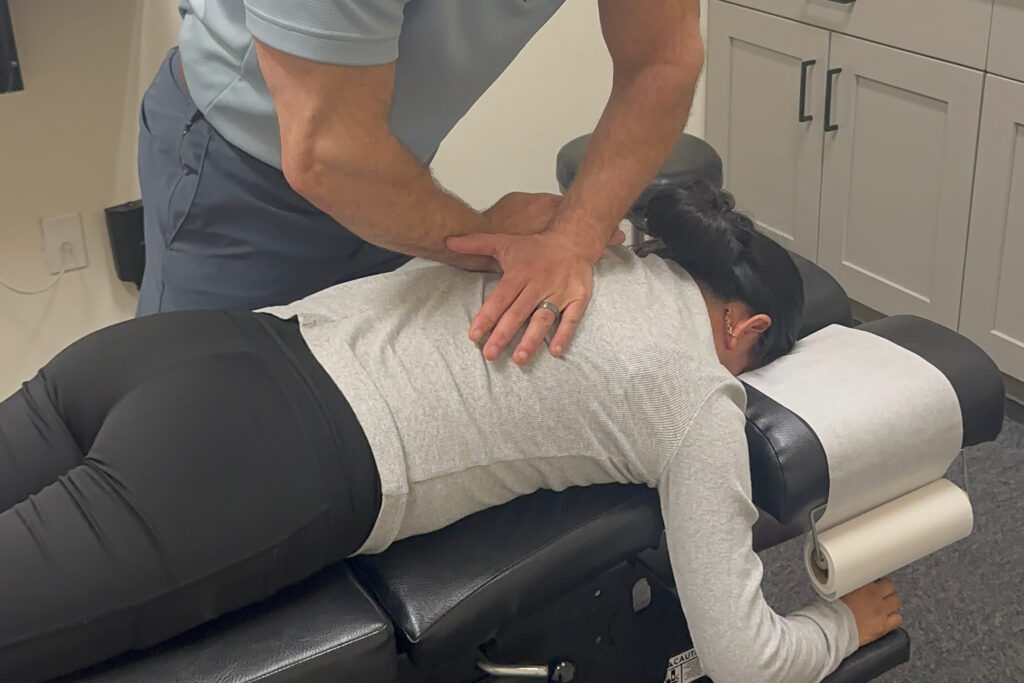
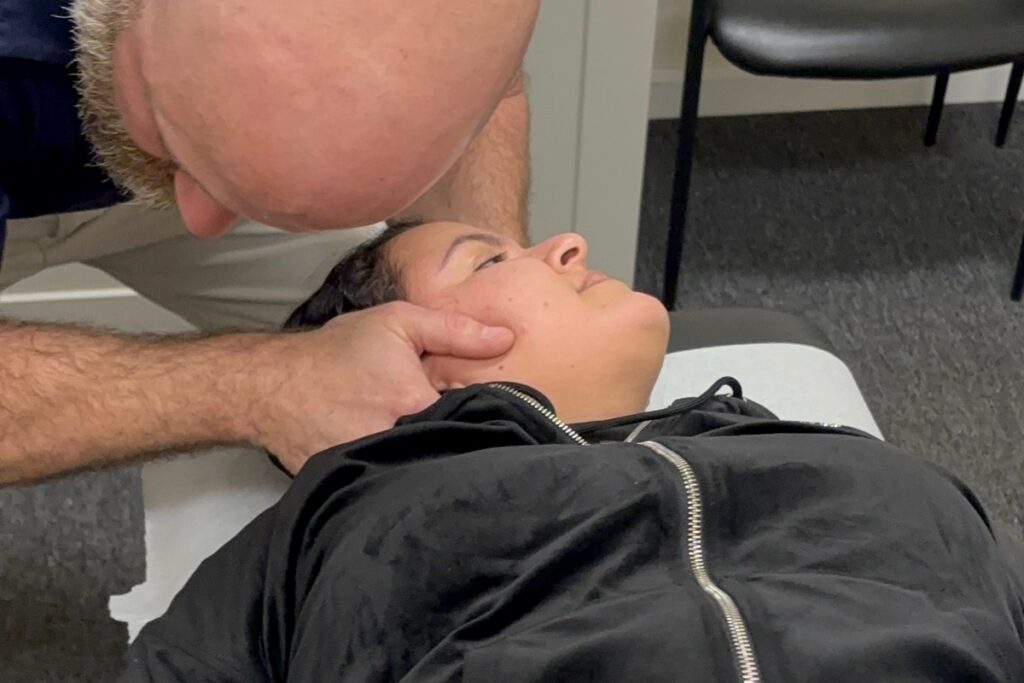
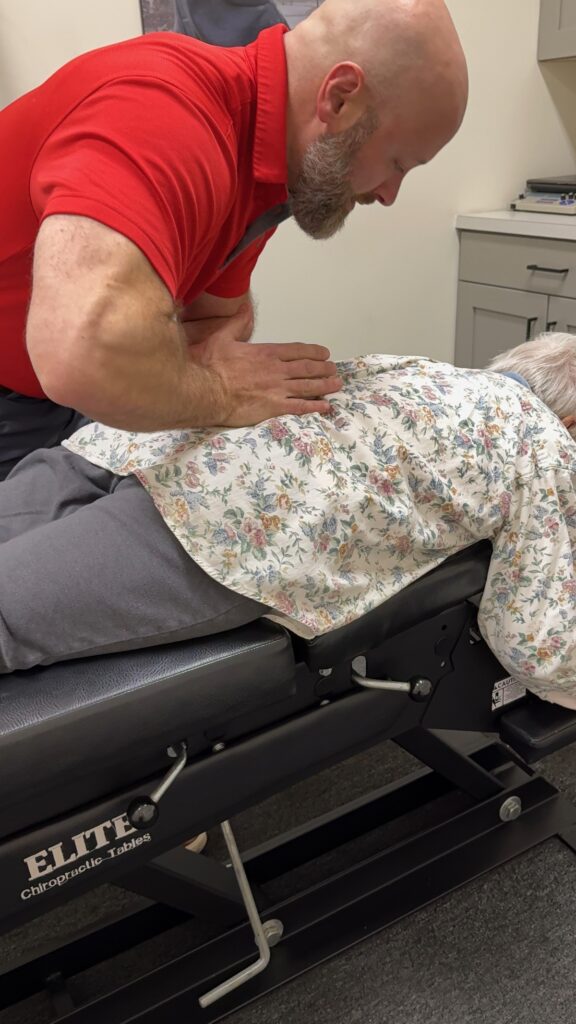
At Fanwood Back Relief Center, Dr. Eric Chludzinski takes an individualized approach to evaluating and caring for patients with chronic back pain. The foundation of chiropractic care is the manual adjustment — a precise, controlled force applied to specific joints in the spine to restore normal movement, reduce joint restriction, and take pressure off irritated nerves. When joints move the way they’re supposed to, the surrounding muscles and tissues can begin to relax and heal more effectively.
For patients dealing with chronic pain, chiropractic adjustments aren’t a one-time fix. They’re typically part of an ongoing, evolving care plan. Dr. Eric Chludzinski works with each patient to assess how their spine is functioning, identify areas of restriction or misalignment, and apply adjustments in a way that’s appropriate for that person’s specific anatomy, age, and health history. This is not a one-size-fits-all approach — and that matters a great deal when you’re dealing with a condition as nuanced as chronic back pain.
Evidence published in journals like the Spine Journal and summarized by organizations like the National Center for Complementary and Integrative Health (NCCIH) suggests that spinal manipulation can be effective in reducing pain and improving function in people with chronic low back pain. As with any care approach, results vary by individual — but the safety profile of manual chiropractic adjustments is well established, making it a low-risk starting point for most patients.
Both our Fanwood and Flemington offices are structured to support ongoing, long-term care. Whether you’re coming in for your first evaluation or you’ve been managing chronic back pain for years, the goal is always the same: to help your spine function better so your body can do what it’s designed to do.
Practical Tips for Managing Chronic Back Pain at Home
Chiropractic care is most effective when it’s supported by healthy daily habits. The time you spend outside of the office matters — and there are several evidence-aligned strategies that can help extend and support the benefits of your adjustments.
Stay moving. One of the most well-supported recommendations for chronic back pain is to avoid prolonged inactivity. The spine relies on movement to circulate nutrients to the discs and joints. Gentle, consistent movement — even short walks throughout the day — can reduce stiffness and support spinal health. Sitting for hours without a break is one of the most common patterns we see among patients in both our Flemington and Fanwood communities, and it’s one of the most impactful habits to change.
Pay attention to your sleep position. Sleep is when your body recovers, and a poor sleeping position can undo a lot of good work. Generally, sleeping on your side with a pillow between your knees, or on your back with a pillow under your knees, helps maintain the natural curves of the spine. Sleeping on your stomach is typically discouraged for chronic back pain sufferers because it places the neck in rotation and increases lumbar compression.
Strengthen your core — gently. The muscles of the abdomen and deep stabilizers of the spine play a crucial role in supporting the lumbar region. Even basic activation exercises, done consistently and without aggravating your pain, can make a meaningful difference over time. Dr. Eric Chludzinski can provide guidance on what’s appropriate for your individual situation.
Manage stress actively. Chronic stress increases muscle tension and can amplify pain sensitivity. Finding sustainable ways to manage stress — whether through breathing practices, time outdoors, or adequate sleep — is a legitimate part of chronic back pain management that is often undervalued.
When to See a Chiropractor
If your back pain has persisted for more than a few weeks, is affecting your daily activities, or keeps returning after short periods of relief, those are meaningful signs that your spine deserves a professional evaluation. Chronic back pain rarely resolves on its own without some form of intervention — and the longer compensatory patterns are allowed to continue, the more entrenched they can become.
Patients from Fanwood, Flemington, and surrounding areas often tell us they waited too long before seeking care — assuming their pain would eventually go away, or not wanting to “bother” with an appointment. We understand that hesitation, but early evaluation and appropriate care almost always leads to better outcomes than waiting.
There are also situations where chiropractic care should be coordinated with or deferred to medical care. If you’re experiencing any of the following, please seek prompt medical attention: back pain accompanied by bladder or bowel changes, severe weakness or numbness in the legs, pain that is constant and unrelenting regardless of position, or back pain following significant trauma. These can be signs of conditions that require urgent medical evaluation before chiropractic care begins.
For the vast majority of chronic back pain patients, however, manual chiropractic care is a safe, appropriate, and meaningful place to start.
Comparison: Helpful vs. Harmful Daily Habits
| Daily Habit | Helpful for Chronic Back Pain | Harmful for Chronic Back Pain |
|---|---|---|
| Sitting posture | Sitting upright with lumbar support, feet flat on the floor | Slouching forward, crossing legs for extended periods |
| Movement habits | Taking short movement breaks every 30–45 minutes | Sitting for 2+ hours without getting up |
| Sleep position | Side-lying with pillow between knees or back-lying with pillow under knees | Stomach sleeping, which increases lumbar and neck strain |
| Lifting technique | Bending at the knees, keeping the object close to the body | Bending at the waist and twisting simultaneously |
| Stress management | Regular outdoor activity, adequate sleep, breathing practices | Chronically elevated stress with no active management strategy |
| Professional care | Regular chiropractic evaluations and adjustments | Ignoring persistent symptoms or relying solely on pain medication |
Myths vs. Facts About Chronic Back Pain
Myth: “Chronic back pain always means something is seriously wrong with my spine.”
Fact: Many people with chronic back pain have imaging findings that look alarming on paper but don’t correlate directly with their level of pain. Conversely, some people with significant structural changes have very little pain. Chronic back pain is complex, and its severity isn’t always determined by what shows up on an X-ray or MRI. A thorough clinical evaluation — like those performed at Fanwood Back Relief Center — provides context that imaging alone cannot.
Myth: “Rest is the best treatment for chronic back pain.”
Fact: While rest may be appropriate in the very early stages of an acute flare-up, prolonged bed rest has been shown to worsen chronic back pain outcomes. Movement — even gentle and limited movement — is generally recommended to maintain circulation, reduce stiffness, and prevent further deconditioning of the muscles that support the spine.
Myth: “Chiropractic adjustments are only for neck and back ‘cracking’ — they can’t help with real pain.”
Fact: The audible “crack” that sometimes occurs during a chiropractic adjustment is simply the release of gas bubbles from joint fluid — it’s not bones cracking, and it’s not always present. More importantly, the value of a manual adjustment lies in its effect on joint mobility, nerve function, and surrounding muscle tension — not the sound. Evidence from the NCCIH and other institutions supports spinal manipulation as a meaningful approach to managing chronic low back pain.
Myth: “Once you start seeing a chiropractor, you have to go forever.”
Fact: The frequency and duration of chiropractic care is always tailored to the individual. Some patients come in for a defined course of care and then transition to periodic wellness visits by choice. Others come as needed during flare-ups. Dr. Eric Chludzinski discusses care plans openly and honestly, so patients understand what to expect and can make informed decisions about their health.
Myth: “Chronic back pain is just something I have to live with as I get older.”
Fact: While age-related changes in the spine are real, they don’t automatically mean inevitable, unmanageable pain. Many patients in their 50s, 60s, and 70s experience significant improvements in their quality of life through conservative care, lifestyle modifications, and appropriate spinal management. Age is not a disqualifier for effective chronic back pain management.
Final Thoughts
Living with chronic back pain can feel isolating and discouraging — especially when you’ve tried things that haven’t worked, or when the pain has simply become a background noise in your life that you’ve started to accept as normal. But it doesn’t have to stay that way. Effective, sustainable chronic back pain management is possible, and it starts with understanding what’s happening in your body and taking a thoughtful, conservative approach to addressing it.
At Fanwood Back Relief Center, we’re honored to serve patients across both our Fanwood and Flemington communities. Dr. Eric Chludzinski brings genuine care, clinical experience, and a commitment to individualized treatment to every patient who walks through our doors — whether they’re dealing with a recent flare-up or years of unresolved chronic pain. Our goal is never just to get you through the day — it’s to help you feel like yourself again and keep you that way for the long term.
If you’re in the Fanwood or Flemington area and you’ve been struggling with back pain that just won’t quit, we encourage you to take that first step and schedule an evaluation. You don’t have to keep managing this alone, and you don’t have to settle for a life shaped around your pain.
Frequently Asked Questions
How long does it take to see results from chiropractic care for chronic back pain?
Results vary depending on how long the condition has been present, the underlying cause, and individual health factors. Some patients notice improvement within the first few visits, while others require a longer course of care before significant changes occur. Dr. Eric Chludzinski will provide a realistic assessment during your initial evaluation.
Is chiropractic care safe for older adults with chronic back pain?
Yes, chiropractic care can be safely adapted for older patients. Dr. Eric Chludzinski adjusts techniques based on age, bone density, and individual health history to ensure that care is both effective and appropriate. Many older patients in our Fanwood and Flemington communities benefit significantly from regular chiropractic care.
Can I continue seeing my medical doctor while also receiving chiropractic care?
Absolutely. Chiropractic care works best as part of a broader health team approach. Dr. Eric Chludzinski supports open communication with other healthcare providers and will refer patients to appropriate specialists when necessary.
What does a chiropractic adjustment for chronic back pain actually feel like?
Most patients describe a chiropractic adjustment as relieving rather than painful. There may be brief pressure or mild soreness afterward — similar to how muscles feel after exercise — but significant discomfort during an adjustment is uncommon. The experience varies based on the technique used and the patient’s individual condition.
How is chronic back pain different from regular back soreness?
Regular back soreness typically resolves within a few days with rest and minor care. Chronic back pain, by contrast, persists for 12 weeks or more and often follows a pattern of flare-ups and partial relief. If your pain keeps returning or has never fully resolved, it warrants a professional evaluation.
Do I need imaging like an X-ray or MRI before seeing a chiropractor?
Not always. Many chiropractic evaluations begin with a thorough history and physical examination. If imaging is warranted based on your symptoms or history, Dr. Eric Chludzinski will advise you accordingly. In some cases, existing imaging can be reviewed to inform care planning.
TL;DR Summary
- Chronic back pain is defined as back pain lasting 12 weeks or longer and requires a consistent, thoughtful management strategy — not just temporary fixes.
- Common causes include spinal joint dysfunction, postural habits, degenerative changes, and muscle imbalances that compound over time.
- Manual chiropractic adjustments are a well-supported, conservative approach to chronic back pain management, recognized by leading health organizations.
- Daily habits — including how you sit, sleep, move, and manage stress — play a significant role in either supporting or undermining your spinal health.
- Fanwood Back Relief Center, with offices in Fanwood and Flemington, NJ, offers individualized chiropractic care under Dr. Eric Chludzinski to help patients achieve long-term relief from chronic back pain.